

Keynote Speakers
Hear from world-renowned experts and innovators.
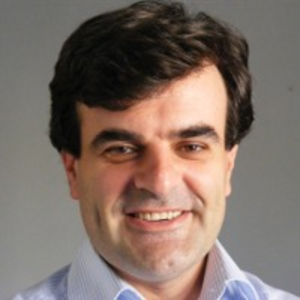
Giuseppe Lipari
University of Lille, FranceModular Timing Analysis of Embedded Real-Time Systems
View Abstract & BioAbstract
In this talk I will present the main results of my research on real-time scheduling analysis for complex real-time systems using modular, component-based techniques. After an introduction to the problem and some background on real-time systems, I will discuss hierarchical scheduling and timing isolation to add robustness and fault-tolerance; sensitivity analysis over execution time variations; parametric worst-case execution time analysis. Finally, I will present my vision of current and future work on modular timing analysis of real-time systems in the context of my current IUF grant.
Speaker Bio
Giuseppe Lipari is Professor of Computer Science at the University of Lille and leader of the team SYCOMORES at CRIStAL and Inria. He has been Associate Professor at the Scuola Superiore Sant'Anna of Pisa (Italy) from 2000 to 2012 and visiting professor at the ENS Cachan from 2012 to 2014. His research interests cover real-time scheduling, embedded systems and operating systems. He is IEEE Fellow for his contributions to "Resource Reservations for Real-Time Systems", and a senior member of the Institut Universitaire de France.

Valeria Loscri
Inria Lille-Nord Europe, FranceSecuring the Future: Understanding Attacks on AI-Driven Network Management
View AbstractAbstract
In the context of network management, the integration of Artificial Intelligence (AI) and Machine Learning (ML) is gaining momentum, permitting automation and optimization. However, integrating AI/ML into network management changes the security landscape. On one side, security can be improved by enhancing threat and anomaly detection, and enabling a more rapid response to threats. On the other side, AI/ML-based approaches are prone to different types of attacks, ranging from adversarial attacks, data privacy and confidentiality, and model drift. In this talk, we will review the benefits of AI/ML in network management as well as their dark side when employed in this context, highlighting key aspects related to secure AI/ML training, deployment, and adversarial defense mechanisms.

Johann Marquez-Barja
University of Antwerp & IMEC, BETowards Cooperative and Connected Automated Mobility: Connected Antwerp
View Abstract & BioAbstract
Connected, Cooperative, and Automated Mobility (CCAM) is reshaping how cities and transport corridors operate — and Antwerp, Belgium is at the forefront. This keynote talk will illustrate how Antwerp’s testbed facilities, such as Smart Highway and Citylab, provide a unique platform for deploying, validating, and scaling CCAM solutions. By showcasing real projects that demonstrate interoperability across heterogeneous networks, practical teleoperation use cases, and education-centred remote experimentation, the keynote will offer both technical insights and a vision for how European cities can evolve toward smarter, safer mobility systems.
Speaker Bio
Prof. Marquez-Barja is a distinguished academic and researcher, currently holding a dual role as a Professor at the University of Antwerp and IMEC, Belgium. He leads the Programmable & Intelligent Networks Group at IDLab/imec Antwerp, where he has played a pivotal role in advancing wireless technology and communication networks. Ranked among the top 2% scientists world-wide in Telecommunications Networks and AI, he is a Distinguished Lecturer for both the IEEE Vehicular Technology Society and the IEEE Education Society. His research interests encompass 5G advanced architectures, edge computing, IoT communications, and connected mobility development.

Mariusz Głąbowski
Poznan University of Technology, PLSITIes: A Platform for Enhancing IoT System Security in Smart Cities
View AbstractAbstract
Securing the Internet of Things (IoT) infrastructure is a critical challenge for modern smart cities. The SITIes platform, developed within the NATO Science for Peace and Security Programme, offers a comprehensive, modular solution for managing cybersecurity risks in urban IoT environments. It integrates vulnerability tracking, asset monitoring, and risk estimation to support data-driven decisions and improve the resilience of smart infrastructures. The platform combines multiple database technologies to effectively capture and analyze complex IoT data, using a hybrid approach with Neo4J and Elasticsearch. It also includes the SecurityScanner component for autonomous network scanning and is exploring federated learning and blockchain-enhanced training techniques for privacy-preserving, distributed threat intelligence.

Sara Bouchenak
INSA Lyon, FranceChallenges and Opportunities on Distributed and Federated Learning Security and Robustness
View Abstract & BioAbstract
AI is everywhere, in edge and cloud computing systems, with distributed and federated machine learning. Federated learning (FL) is a distributed machine learning paradigm that enables data owners to collaborate on training models while preserving data privacy. As FL effectively leverages decentralized and sensitive data sources, it is increasingly used in many application domains including remote healthcare, smart buildings, and mobile applications. However, FL raises several ethical concerns as it may introduce bias with regard to sensitive attributes, it is not robust against malicious participants that attempt to poison the data and model, and it remains vulnerable to privacy attacks. In this talk, we will first discuss the open scientific issues in FL bias, robustness and privacy, before presenting novel FL protocols for handling them.
Speaker Bio
Sara Bouchenak is Professor at INSA Lyon and member of DRIM research group at LIRIS laboratory since 2014. She is head of Fédération Informatique de Lyon since 2021, grouping a total of 850 members. Her research topics include distributed computing systems, distributed and federated learning, with a special interest to their fairness, robustness and privacy. Prior to that, she was Associate Professor at the University of Grenoble between 2004 and 2014, and post-doctoral associate researcher at EPFL, Switzerland, in 2003. She is co-author of several A/A* rank publications and has coordinated several European, national and regional projects.
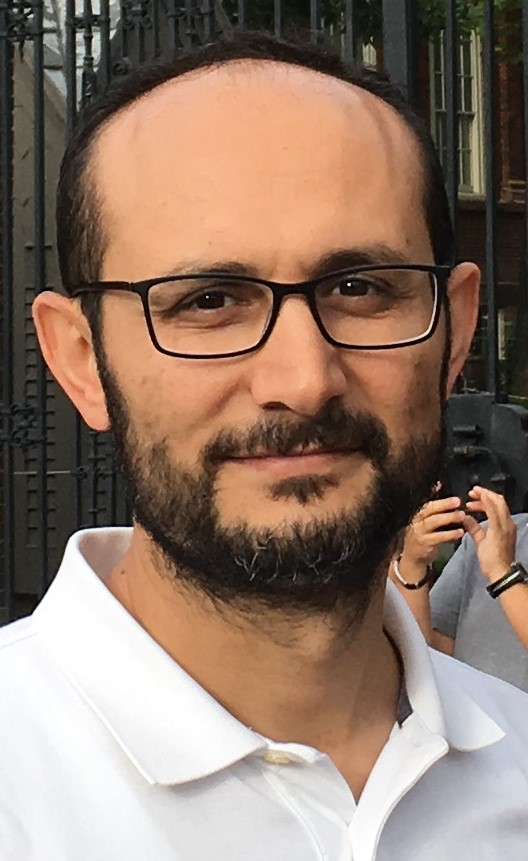
Ozcan Ozturk
Sabancı University, TurkeyHeterogeneous Computing and Domain-Specific Hardware
View Abstract & BioAbstract
Specialized hardware accelerators can significantly improve computing systems' performance and power efficiency. In this presentation, we will focus on domain-specific hardware. We will discuss the reasons for the emerging hardware accelerators in general. Specifically, we will cover an accelerator for graph analytics applications and propose a configurable architecture template optimized for iterative vertex-centric graph applications with irregular access patterns and asymmetric convergence. The proposed architecture addresses the limitations of the existing multi-core CPU and GPU architectures for these types of applications.
Speaker Bio
Dr. Ozturk has been on the faculty as a Professor at Sabancı University since February 2024. Prior to joining Sabancı, he worked as a Professor in the Department of Computer Engineering at Bilkent University (2008-2024). His research interests are in heterogeneous computing, hardware accelerators, GPU computing, computer architecture, and compiler optimizations. He has been recognized by the Bilkent University Distinguished Teaching Award in 2019, Science Academy’s Young Scientist Award (BAGEP) in 2018, HiPEAC Paper Award in 2016, and the IBM Faculty Award in 2009. He received his Ph.D. in computer science from Pennsylvania State University.
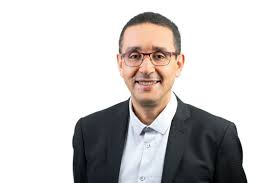
Houari Sahraoui
Université de Montréal, CanadaAdvanced Software Modeling with Artificial Intelligence
View Abstract & BioAbstract
The rapid progress of artificial intelligence, and in particular large language models (LLMs), is transforming the way we approach software modeling and development. Beyond code generation, AI is increasingly contributing at higher levels of abstraction, assisting with model construction, evolution, and integration within complex pipelines. This keynote will explore recent advances in AI-driven modeling assistance, highlighting how LLMs can support tasks such as model completion, refinement, and semantic alignment. It will also examine the role of AI in digital twins, and discuss the opportunities and challenges of integrating generative AI into end-to-end development workflows.
Speaker Bio
Houari Sahraoui is a Professor at the GEODES software engineering lab within the Department of Computer Science and Operations Research at the Université de Montréal. He earned his Ph.D. in Computer Science from Pierre & Marie Curie University (LIP6) in 1995. His research focuses on AI for Software Engineering, including software automation, model-driven engineering, digital twins, and generative AI. He has published over 200 papers in top venues, earning multiple Best Paper Awards. He has held several leadership roles, serving as General Chair of ASE, MODELS, and VISSOFT, and is a founding member of CS-Can | Info-Can.

Alessio Mengoni
University of Firenze, ItalyCustom bio-inoculants: deciphering genotype interactions
View Abstract
Pierre Boulet
University of Lille, FranceEuropean Health Data Space Regulation: cybersecurity and organisation rules to share health data for research
View Abstract & BioAbstract
Sharing health data for research purposes requires establishing a trust framework to ensure the protection of these very sensitive data. The European Health Data Space regulation provides such a framework. This talk will discuss what this regulation changes in terms of technical and organisational rules, focusing mostly on cybersecurity. Although this regulation concerns European Union member states, lessons can be learnt for all countries on the balance between data security and data sharing.
Speaker Bio
Pierre Boulet is Professor of Computer Science at the University of Lille, researcher at the CRIStAL laboratory, and teacher at the Faculty of Science and Technology. His research interests cover parallelism, high-performance computing, distributed systems, software engineering, embedded systems, and neuromorphic architectures. He has held several scientific and administrative responsibilities, including Vice-President for Digital Affairs at the University of Lille.

Congduc Pham
University of Pau, FranceThe LPWAN technologies ecosystem for ubiquitous and massive Internet-of-Things
View Abstract & BioAbstract
LPWAN technologies targeting the Internet of Things domain provide long-distance connectivity to battery-operated smart objects that were once difficult to connect with multi-hop approaches based on short-range communication technologies. Coupled with powerful and affordable microcontrollers, they enable new sensing, monitoring, and surveillance applications that can be deployed more easily. This talk will introduce selected LPWAN technologies, explain how they operate and fit into the ecosystem depending on application needs and constraints, and discuss the remaining challenges in efficiently sharing radio resources when deploying large-scale LPWAN networks, including non-terrestrial networks. It will conclude with a vision of what is ahead in the LPWAN ecosystem.
Speaker Bio
Congduc Pham is Professor of Computer Science at the University of Pau, France. His research interests include wireless sensor networking, Internet of Things, congestion control, and resource allocation. He has contributed to several European and international projects on IoT and LoRa technologies, including H2020 WAZIUP, H2020 WAZIHUB, H2020 HUBIQUITOUS, and PRIMA projects such as INTEL-IRRIS and RESILINK, focusing on low-cost IoT, AI, and digital platforms for smart agriculture and smallholder communities.